




Hair Extension Maintenance Guide for Salons
013
Hair Extension Maintenance Guide for Salons: How to Prevent Tangling, Matting, Slipping & Aftercare Complaints
Introduction
ESSME has found that hair extension maintenance is one of the most common pain points in the hair extension industry. Many salon owners and professional hairstylists have encountered similar issues, such as “after one wash hair extensions became dry and frizzy /rough/matted,” “extensions came out but beads stayed in the hair,” and “followed aftercare but still had problems.”
We believe that when hair extensions become dry, rough, tangled, shed, slip, or feel unstable during use, these issues are usually the result of several overlapping factors rather than one isolated cause. Professional salon and stylist resources often analyze these issues from two broad directions: product quality factors and installation, lifestyle, and maintenance-related factors. It should be noted that the following analysis of specific causes is mainly based on a small number of traceable individual cases and anonymous feedback. This blog is not intended to broadly generalize all hair extension problems, but rather to provide salons with a framework for judgment and troubleshooting.
As a professional remy human hair extensions wholesale supplier, ESSMEI will look at these issues from both perspectives to help salons understand the possible causes, in order to serve their clients better, reduce after-sales concerns, and improve the overall hair extension service experience.
Summary
For salons, hair extension maintenance problems usually come from a combination of hair quality, installation details, aftercare habits, and client lifestyle factors. To prevent dry, frizzy, matted, or slipping hair extensions, salons should choose stable Remy human hair extensions, check bead or ring installation carefully, guide clients on proper hair extension aftercare, and schedule regular maintenance appointments.
H2: Troubleshooting Table
| Core Issue | Client Feedback | Possible Cause | Salon Check | Supplier / Product Check | Client Aftercare Check |
| Matting | “After one wash, hair extensions became dry, frizzy, rough, or matted.” | Non-Remy hair, inconsistent cuticle direction, excessive acid washing, silicone coating loss, product buildup, friction, or improper washing and drying habits. | Review the client’s shampoo, conditioner, heat use, washing routine, brushing habits, and whether the hair was dried fully after washing. | Ask for Remy quality proof, sample wash-test videos, microscope sample videos, and in-salon combing-test results before regular orders. | Remind clients to brush gently, condition mainly the mid-lengths and ends, avoid sleeping with wet hair, reduce friction, and follow a realistic moisture-care routine. |
| Slipping | “Extensions came out but beads stayed in the hair.” | Weak nano tip bond strength, unstable wire-loop anchoring, incorrect ring size, insufficient clamping pressure, poor section size, or unsuitable client hair condition. | Check ring size, section size, clamping pressure, installation angle, bead placement, and whether the natural hair section can hold the extension securely. | Test nano tip connection strength, wire-loop anchoring stability, and product-side bonding quality. | Check whether the client used oil, conditioner, or heavy products near the attachment points, brushed too aggressively, or missed maintenance appointments. |
| Slipping | “Wefts slid down after washing.” | Excessive extension weight, stacked rows, poor weight distribution, too few anchor points, or natural hair that is too fine, fragile, or low-density for the chosen volume. | Check natural hair density, scalp condition, strand strength, row placement, anchor points, and total extension weight. | Choose lighter wefts, better distributed methods, or products suitable for fine or fragile hair. | Remind clients to dry the roots fully, avoid pulling while brushing, and return for regular maintenance checks. |
| Slipping | “My tape-ins slipped out after the first wash.” | Product residue near tape tabs, including oils, heavy styling creams, rich leave-ins, silicone-heavy products, or solvent-type alcohols, may weaken tape-in adhesive grip. | Review the client’s shampoo, conditioner, curl cream, serum, hair oil, product placement, wash timing, and whether the tape tabs feel oily, slippery, or gummy. | Provide tape-in-safe aftercare guidance and clear product-use instructions for products that should not be applied near the attachment area. | Keep conditioner, oils, serums, curl creams, rich leave-ins, and silicone-heavy products away from tape tabs. Apply moisturizing products mainly from mid-lengths to ends, rinse roots thoroughly, and contact the salon if slipping or residue appears. |
| Aftercare | “The client followed aftercare but still had problems.” | Sweat residue, frequent washing, UV exposure, outdoor exercise, sleeping with damp hair, friction, product buildup, or an aftercare routine that does not match the client’s lifestyle. | Ask about workout habits, sweating level, outdoor exposure, washing frequency, sleeping habits, and product use. | Provide educational support, aftercare guides, and product recommendations that match different client lifestyles. | Adjust the aftercare routine based on lifestyle: cleanse sweat-prone areas gently, avoid over-washing, protect from sun exposure, keep hair dry and detangled, and schedule routine maintenance. |
Key Takeaways
- Hair extension maintenance problems are rarely caused by one single factor. Dryness, frizz, matting, slipping, or unstable wear may come from a combination of hair quality, installation details, aftercare habits, and client lifestyle.
- If hair extensions become dry, rough, frizzy, or matted after washing, salons should first review the hair quality, especially whether the extensions are made with true Remy human hair with aligned cuticles.
- Non-Remy hair, excessive acid washing, silicone coating loss, or inconsistent cuticle direction may increase friction between strands, making hair extensions more likely to tangle, matt, or feel rough after washing.
- If Nano Ring or Micro Bead Hair Extensions slip out while the beads stay in the client’s hair, salons should check both installation factors and product-side stability, including ring size, clamping pressure, section size, nano tip bond strength, and wire-loop anchoring.
- Heavy wefts or stacked extension rows may slide down if the client’s natural hair cannot safely support the added weight or if too much weight is concentrated on too few anchor points.
- Salons can reduce aftercare complaints by choosing stable Remy human hair extensions, checking sample based wash-test or microscope evidence, educating clients clearly, and scheduling regular maintenance appointments.
Product Quality Factors
Matting: Possible Causes Behind “after one wash hair extensions became dry/rough/matted”
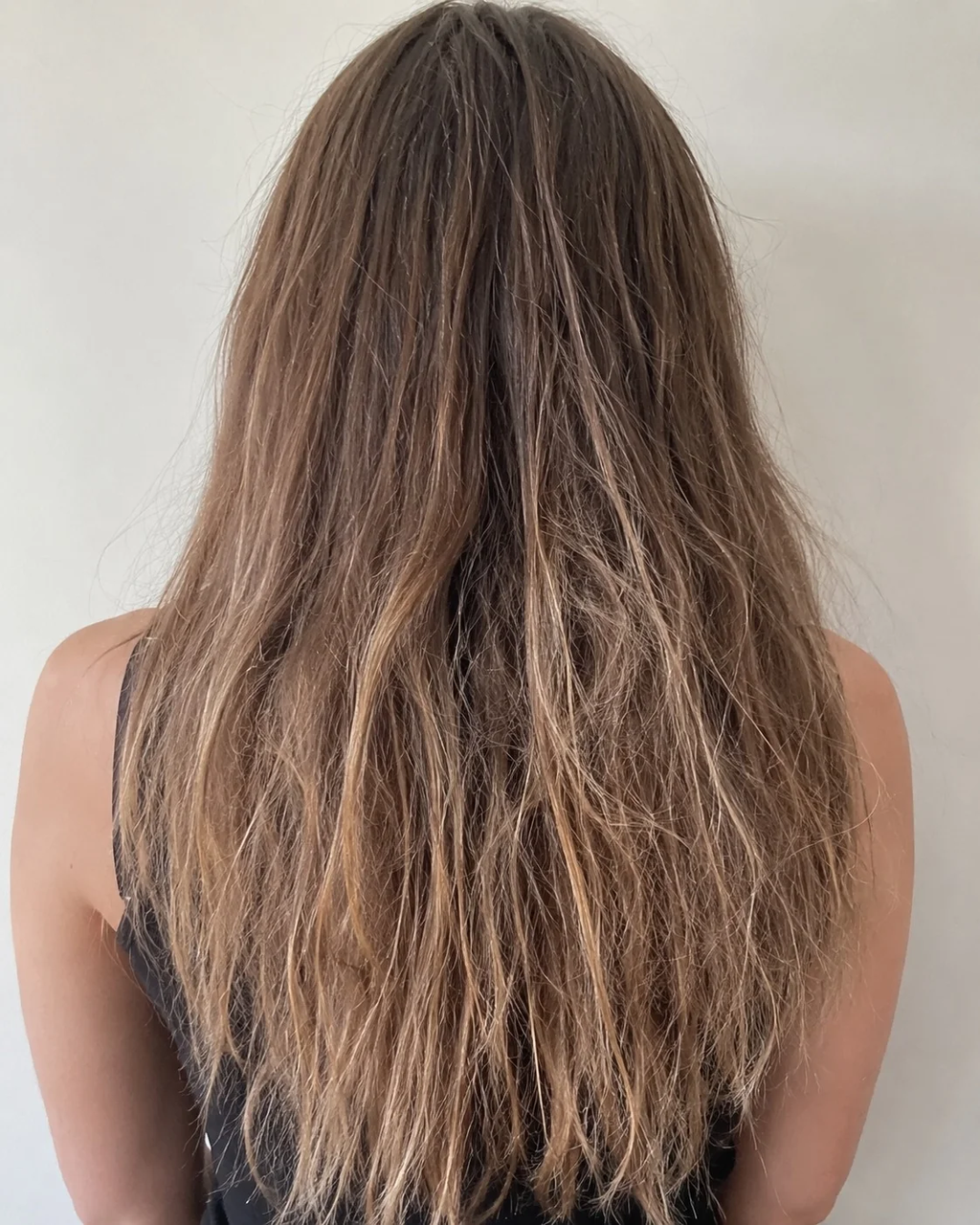
Non-100% Remy Human Hair Extensions, Excessive Acid Washing, and Silicone Coating
In one public Reddit hair extension discussion, a user shared that she had purchased low-cost tape-in extensions from an online shop that advertised the product as “luxury remy hair.” According to her experience, the extensions looked beautiful, soft, and smooth immediately after installation. However, after washing, drying, and straightening the hair, the extensions became puffy, frizzy, and difficult to smooth, even though she said she had used salon-recommended shampoo and conditioner and only conditioned the ends. While one online discussion cannot prove the exact cause of the issue, this type of feedback reflects a common concern in the hair extension market: some extensions feel impressive at first, but their real performance becomes more obvious after washing.
In general, high-quality hair extensions prioritize Remy human hair with the cuticles aligned in the same direction. Among them, Remy braid hair that is organized and collected in braided form can help maintain better strand direction consistency and minimize issues caused by mixed cuticle directions. Because the cuticles are more smoothly aligned, there is less friction between the hair strands. As a result, this type of hair is usually more durable, feels smoother, and is less likely to become dry, rough, or tangled.
However, the sourcing and processing costs of Remy braid hair are relatively high. To reduce costs, some products on the market may use non-Remy or lower-grade raw hair materials while still being promoted as “Remy” or “luxury Remy” hair. Because the cuticle directions of this type of hair are inconsistent, the strands are more likely to rub against and wrap around each other, increasing the risk of tangling. To imitate the smooth hand-feel of true Remy hair at the beginning, some manufacturers may use high-concentration acid washing to remove or damage the cuticles, and then apply a silicone coating to make the hair appear soft, shiny, and smooth when it leaves the factory.
Although this type of treatment can create a convincing first impression, it does not provide the same long-term stability as properly sourced Remy hair. After washing, the surface coating may gradually wash away, and the true condition of the hair may become exposed. This can make the hair extensions more prone to becoming dry, frizzy, coarse, tangled, or frizzy after washing, and may even increase the risk of matting during daily wear.
Salon Tip:
For salons, choosing the right Remy human hair extension supplier is one of the most important steps in reducing after-sale problems. Before placing regular orders, salons should check whether the supplier can provide stable Remy quality, transparent hair material information, and practical quality proof, such as sample wash-test videos and sample microscope videos. These materials can help salons better understand how the hair performs after washing, whether the cuticles appear properly aligned, and whether the hair is likely to stay smooth and manageable during client use. A simple in-salon wash test and combing test can also help confirm the product’s smoothness, softness, shedding control, and anti-tangling performance before recommending it to clients.
Slipping: Possible Causes Behind “extensions came out but beads stayed in the hair”
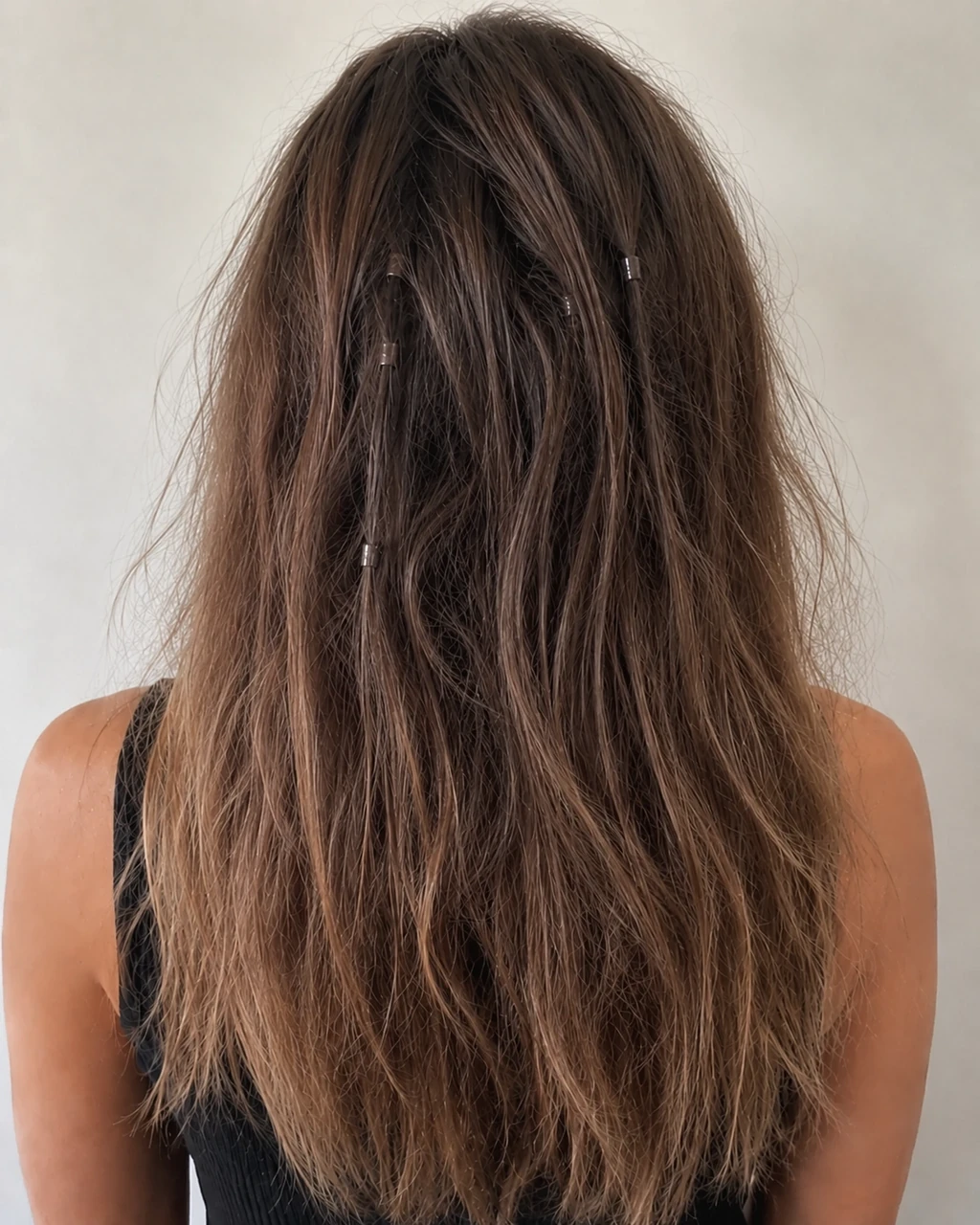
Nano Ring Hair Extensions Slipping and Wire-Loop Anchoring Stability
In one professional hair extension forum discussion, a stylist shared a nano ring (micro bead) installation problem where several hair extension strands slipped out soon after fitting. What made the case especially relevant was that the rings were still attached to the client’s natural hair, but the extension strands had come out of the rings. While one discussion cannot prove the exact cause, this type of case highlights an important product-side concern: the stability of the wire loop and bond inside the nano tip.
Nano Ring (micro bead) Hair Extensions are valued by salons because the bonds are small, discreet, and suitable for clients who want a natural-looking installation. However, because the nano connection point is much smaller than many other extension methods, the internal structure of the nano tip needs to be especially stable. Even when the ring remains fixed on the natural hair, the extension strand may still loosen if the wire loop is not firmly anchored inside the tip.
This type of slipping is not always caused by client aftercare. In some cases, the issue may be related to the strength of the bond inside the nano tip and how securely the wire loop is held in place. During daily brushing, washing, sleeping friction, and routine movement, each strand is repeatedly pulled and moved. If the wire-loop anchoring or bond strength is unstable, the extension may gradually loosen from the tip area during normal wear.
Of course, salons should still make sure the nano ring, tip size, and installation method are properly matched. However, from a product quality perspective, the key point is whether the wire loop inside the nano tip is strong enough to withstand repeated tension during regular salon use and client aftercare.
Salon Tip:
When evaluating Nano Ring Hair Extensions, salons should not only check hair quality and color matching, but also pay close attention to the structure of the nano tip. Before recommending a product to clients, salons can gently test the connection point, check whether the wire loop is firmly anchored inside the tip, and observe whether the strand remains stable when brushed or handled. Salons can also look for suppliers that are confident enough to publicly share product testing videos, such as connection-point strength tests or sample testing videos. This can help salons better evaluate whether the nano ring extensions are stable enough for regular salon use.
Installation, Lifestyle, and Maintenance-Related Factors
Slipping: Possible Causes Behind “followed aftercare but still had problems.”
Excessive Extension Weight and Insufficient Natural Hair Load-Bearing Capacity
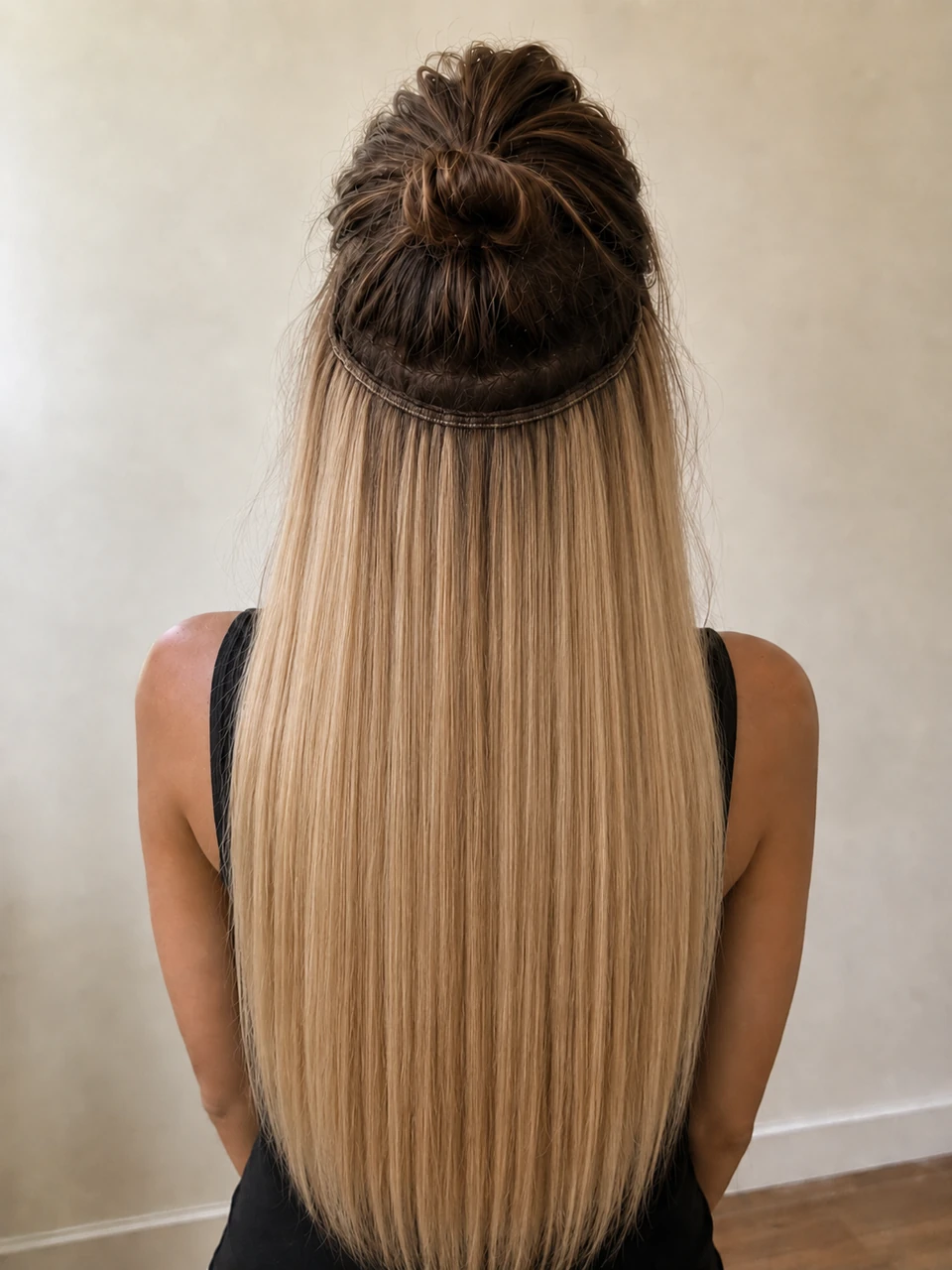
In one public Reddit hair extension discussion, a user shared that her extensions looked great immediately after installation, but started sliding down after washing. She said the first installation completely came out after about one week, and although the second installation stayed in better, the extensions still felt insecure and continued to slide down with each wash. She also mentioned that the installation used a stacked weft with four pieces.
While one online discussion cannot prove the exact cause, the case highlights an important salon-side factor: the client’s natural hair must be able to support the added extension weight. If too much hair is installed in one row, if the weight is concentrated on too few beads, stitches, or anchor points, or if the client’s natural hair is too fine or weak for the chosen volume, the attachment area may experience excessive tension. During washing, brushing, drying, sleeping, and daily movement, this repeated tension can make extensions more likely to loosen, slide down, or pull on the natural hair.
Therefore, before installing extensions, salons should evaluate whether the client’s hair density, strand strength, scalp condition, section size, and desired extension weight are properly matched.
Salon Tip:
Before installing heavy wefts or multiple extension pieces, salons should assess whether the client’s natural hair can safely support the desired volume. In addition, the American Academy of Dermatology notes that extensions can damage natural hair if proper precautions and care are not taken. It also recommends wearing extensions that are light enough not to pull on the natural hair and having them installed by a salon that specializes in these services. Based on this principle, salons should avoid concentrating too much extension weight in one row or on too few anchor points. For clients with fine, fragile, chemically processed, or low-density hair, salons may consider reducing the total extension weight, distributing the hair across more rows, choosing a lighter method, or recommending a more conservative volume plan.
Unsuitable Products Around Tape Tabs May Also Increase Slipping Risks
Some Reddit discussions about extension slipping or coming out are especially focused on tape-ins. Common scenarios include slipping after washing, while rinsing out shampoo, when the hair is wet, after the first wash, or within a few weeks of installation. In one case, a user described all of her extensions sliding out while rinsing shampoo during her first wash. She seemed to have some aftercare awareness and mentioned that she was careful not to apply conditioner directly to the tapes, but she was also using a curl cream and a specific shampoo and conditioner. In the comments, other users pointed out that alcohol, ethanol, and oils could be possible factors, and one suspected that the moringa oil in the shampoo might be the culprit.
Although one Reddit post cannot prove the exact cause, it does reveal a useful pattern: some extension clients may believe they are doing their best to care for their extensions, while the products they use may not actually be suitable for extension wear. Certain ingredients can affect tape-in stability. For example, solvent-type alcohols such as ethanol are commonly used to help soften or remove adhesives. Oil-based ingredients, including moringa oil, may weaken the tape’s grip if they build up around the attachment area. Silicone-heavy products may also leave a smooth residue, making it harder for the adhesive to maintain stable contact with the client’s natural hair.
Salon Tip:
Salons should provide clients with a simple at-home aftercare guide that clearly explains which products should be kept away from the attachment area, where conditioner and leave-in products should be applied, how to cleanse gently and rinse the roots thoroughly, and when clients should contact the salon if they notice slipping, residue, pulling, or discomfort instead of trying to fix the issue themselves.
Salons can also help clients review the shampoo, conditioner, styling cream, serum, and hair oil they are using after installation. Many clients believe they are being careful with their extensions, but if the products are not suitable for tape-in extensions, or if residue builds up around the attachment area over time, the adhesive grip may still weaken and increase the risk of slipping, loosening, coming out, or aftercare-related complaints.
Aftercare: Possible Causes Behind “followed aftercare but still had problems.”
Outdoor Exercise, UV Exposure, and Sweat Residue
In one online discussion among women with sew-in extensions, a user shared that she worked out daily and often felt uncomfortable because her hair felt dirty after only two days. She tried washing her hair every two or three days, but soon noticed that her extensions seemed to become dry much faster when washed too frequently. Other users in the discussion also mentioned similar concerns, including sweat buildup, tangling, discomfort, and difficulty keeping extensions fresh after regular workouts.
This type of feedback reflects a common real-life challenge for extension wearers: the issue is not always caused by the extension product itself. For clients who exercise outdoors, sun and UV exposure can place additional stress on the hair, while research on hair photoaging shows that UV-related damage may increase hair fiber porosity, reduce mechanical strength, and make the hair surface rougher over time. Photodamaged hair may also show dryness, reduced strength, decreased luster, stiffness, and brittleness.
At the same time, sweat residue should not be ignored. According to Cleveland Clinic, sweat is mostly water, but it also contains salt and small amounts of other substances. This is why sweat residue can leave the scalp and hair feeling sticky, salty, or uncomfortable after workouts, especially when combined with oil buildup, dust, and friction.
For hair extension products, daily care is not only about using suitable shampoo and conditioner. It also includes adjusting the care routine according to the client’s lifestyle. Clients who work out often may need to gently cleanse sweat-prone areas, keep the hair dry and detangled after exercise, avoid sleeping with damp hair, reduce unnecessary friction, protect the hair from prolonged sun exposure, and use proper moisturizing or leave-in care when needed. Dermatologists also recommend gentle hair-washing habits, including focusing shampoo mainly on the scalp and using conditioner after shampooing to help keep hair manageable and reduce damage.
Salon Tip:
When providing aftercare guidance, salons should ask clients about their workout habits, outdoor activities, sweating level, and washing frequency. For clients who exercise regularly or spend time outdoors, remind them that sweat residue, frequent washing, UV exposure, and friction can all affect how extensions look and feel over time. Recommend a realistic routine that helps them remove sweat residue without over-washing the hair, maintain moisture, reduce prolonged sun exposure, avoid sleeping with wet hair, and return to the salon regularly to check the condition of their extensions.
Measures ESSMEI Has Taken to Address These Issues
Using Seven Star Remy Human Hair Braid Hair
ESSMEI understands that low-quality raw hair materials can very likely bring salons follow-up problems such as client complaints, rework, compensation, and damage to their reputation. Therefore, we consistently control quality from the source and insist on using high-quality Seven Star Human Remy braid hair to make our core hair extension products.
7-Star Human Remy braid hair is sourced through voluntary purchase channels, with fair compensation paid to hair providers. The hair strands are aligned in the same direction, the cuticles are better preserved, and the overall hair quality is soft, naturally smooth, and has a healthy shine. For this reason, this type of hair material is less likely to become dry, rough, or tangled during wear, helping salons provide clients with a more stable, higher-quality hair extension experience.
To help salons evaluate quality more confidently before ordering, ESSMEI can also provide practical quality evidence, sample-based wash-test videos and randomly selected hair sample microscope videos. The wash-test videos allow salons to see how the hair performs after washing, including its smoothness, softness, and anti-tangling performance. The sample microscope videos help show the surface condition and cuticle direction of randomly selected hair samples, giving salons a clearer view of the hair quality behind the finished products.
Alt text: Microscope view of sampled 7 Star Remy human hair extensions showing consistent cuticle direction and aligned hair surface.
Upgraded Load-Bearing Stability for Nano Ring Hair Extensions
To address possible slipping related to nano tip stability and wire-loop anchoring, ESSMEI has upgraded the connection-point structure with a more advanced production process.
The upgraded Nano Ring system uses a reinforced bond design that helps keep the wire loop securely anchored inside the extension tip. Under internal testing conditions, a single hair extension strand can withstand up to approximately 4.1 kg of pulling force. This improved structure helps enhance the load-bearing stability of the connection point, reduces the risk of the wire loop slipping out from the tip, and supports more stable performance during normal wear and daily maintenance.
By improving bonding strength, tip holding strength, and wire-loop anchoring stability, ESSMEI Nano Ring Hair Extensions are designed to offer salons a more secure and reliable installation experience, especially for clients who need extensions that can better withstand daily brushing, washing, and routine movement.
(Note: Actual performance may vary depending on installation, hair condition, ring matching, clamping pressure, and client maintenance habits.)
Publishing Educational Blogs
ESSMEI understands that the installation and maintenance of Micro Bead Hair Extensions, including Nano Rings, are not easy for salons. In addition to the fixing stability of the product connection point itself, bead/ring matching, section size, clamping pressure, installation angle, and aftercare can all lead to slipping, rework, or client complaints if any detail is not handled properly.
Therefore, we do not only provide products. We also hope to offer more practical support for salons. For installation issues related to Micro Bead Hair Extensions, you can refer to our educational blog, (Hair Extension Tools for Salons: Micro Bead Hair Extensions Guide). For common misunderstandings in clients’ daily care routines, you can also view our hair extension care guide, How to Take Care of Hair Extensions, to help clients better understand aftercare.
If you have any other questions about installation, maintenance, or client education, you are also welcome to contact us. ESSMEI is willing to continue providing more practical educational content for salons, helping you reduce after-sales pressure and improve client experience.
FAQ
Why do hair extensions become matted after washing?
Hair extensions may become matted after washing because of several possible factors, including non-Remy hair, inconsistent cuticle direction, excessive acid washing, silicone coating loss, poor aftercare, or friction during daily wear. Salons should review both product quality and the client’s maintenance routine before deciding the cause.
Why are my hair extensions dry and frizzy after washing?
Hair extensions may become dry and frizzy after washing when the surface coating gradually wears away, the cuticles are not properly aligned, or the hair has been over-processed. Heat styling, frequent washing, sweat residue, UV exposure, and insufficient moisture care may also make extensions feel rougher over time.
How can salons keep hair extensions from tangling?
Salons can help reduce tangling by choosing cuticle-aligned Remy human hair extensions, testing samples before regular orders, teaching clients proper brushing and washing habits, reminding clients not to sleep with wet hair, and scheduling routine maintenance checks.
Why do Nano Ring or Micro Bead Hair Extensions keep slipping out?
Nano Ring or Micro Bead Hair Extensions may slip out because of incorrect ring size, insufficient clamping pressure, poor section size, client hair condition, aftercare habits, or weak wire-loop anchoring inside the nano tip. If the beads stay in the hair but the extension strands come out, salons should also check the nano tip bond stability.
Can heavy weft hair extensions slide down after washing?
Yes. Heavy wefts or stacked extension rows may slide down if too much weight is placed on limited anchor points or if the client’s natural hair is too fine, fragile, or low-density for the chosen volume. Before installation, salons should assess hair density, scalp condition, section size, natural hair strength, and extension weight.
What should salons check before buying wholesale Remy human hair extensions?
Before buying wholesale Remy human hair extensions, salons should check hair quality, cuticle alignment, wash-test results, microscope sample videos, softness after washing, shedding control, anti-tangling performance, and supply chain transparency. These checks can help reduce tangling, matting, slipping, and aftercare complaints.
Call to Action
Choosing stable hair extension products is not just about completing one installation. It is also about helping salons reduce after-sales pressure, improve client satisfaction, and build long-term trust.
As a wholesale remy human hair extensions supplier, ESSMEI supports professional hairstylists and salons in better solving real hair extension maintenance issues from multiple angles, including raw hair quality, product structure optimization, and salon education support. Whether you are looking for more stable Nano Ring Hair Extensions or want to provide clients with clearer hair extension aftercare guidance, we are ready to offer professional support.
Looking for more reliable hair extension products for your salon? Contact ESSMEI to learn more about our wholesale remy human hair extensions and professional support solutions.
Comments (0)
No comments yet.